
No products
- English
- Français
JUNO-106
- Access
- ARP
- Behringer
- Pedals (BOSS / Roland)
- Cyclone analogic
- Elektron
- Electronic Components
- Korg
- Moog
- Oberheim
- Rhodes
-
Roland
- Boss DR-55 Dr. Rhythm
- Boss KM-60
- CMU-800
- CR-78
- CR-5000 CR-8000
- CSQ-100/600
- D-10
- D-20
- D-50
- D-70
- EP-09
- HS-60
- Jazz Chorus Amplifier Series
- JD-800
- JUNO-6
- JUNO-60
- JUNO-106
- JUPITER-4
- JUPITER-6
- JUPITER-8
- JX-3P
- JX-8P
- JX-10 Super JX
- MC-202
- MC-303
- MC-909
- MKB-200
- MKS 30 50 70 80 100
- PA- Vintage Mixer Series
- PG-200
- PROMARS
- Space Echo (RE-101, RE-150, RE-201, RE-301, RE-501)
- RS-09
- RS-505 Paraphonic
- SA-09 Saturn 09
- SBF-325
- SBX-10/80/1000
- SH-1
- SH-2
- SH-3 SH-3A
- SH-5
- SH-7
- SH-09
- SH-32
- SH-101
- SH-1000
- SH-2000
- SPH-323
- SPV-355
- SVC-350
- SYSTEM 100
- SYSTEM 100M & 700
- TB-303
- TR-8
- TR-77
- TR-505/TR-626
- TR-606
- TR-707/727
- TR-808
- TR-909
- U-20
- VK-09
- VP-330
- Sequential Circuits
- Sound Master
- Synths & Gear
- x0xb0x
- Yamaha
- Accessories
Search
Back in stock

Cyclone Analogic TT-303 Bass Bot MK1

Released in 1984, the Roland Juno-106 is a polyphonic analog synthesizer that has left a lasting impact on electronic music. As the successor to the Juno-60, it introduced expanded preset memory, a full MIDI implementation, and a sound architecture based on a Digitally Controlled Oscillator (DCO), ensuring better tuning stability compared to tra...
Released in 1984, the Roland Juno-106 is a polyphonic analog synthesizer that has left a lasting impact on electronic music. As the successor to the Juno-60, it introduced expanded preset memory, a full MIDI implementation, and a sound architecture based on a Digitally Controlled Oscillator (DCO), ensuring better tuning stability compared to traditional VCOs. Its iconic stereo chorus and resonant filters give it a warm and distinctive character, making it a favorite in pop, house, techno, and ambient music. Even today, the Juno-106 remains a studio and stage essential.
Over time, certain components of the Juno-106 wear out and require replacement to maintain its performance and original sound. One of the most failure-prone parts is the voice chips (80017A), which often suffer from deteriorating coating, leading to voice dropouts. The chorus module, crucial to the Juno-106’s signature sound, can develop unwanted noise due to aging capacitors. Potentiometers and faders, used for parameter adjustments, can accumulate dust and lose precision. Additionally, switches, buttons, and MIDI/audio connectors may need replacement to prevent malfunctions.
Maintain and restore your Juno-106 with quality spare parts to extend its lifespan and preserve its signature tone.
JUNO-106 There are 74 products.
-
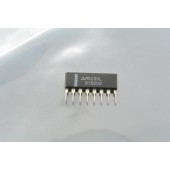 10,00 € In Stock
M5230L Dual Tracking Voltage Regulator
Dual voltage regulator in ZIP‑8 package, generates symmetrical ±15 V rails for power supply sections in vintage Roland synthesizers.
10,00 €In Stock -
 3,00 € In Stock